About us

Our History
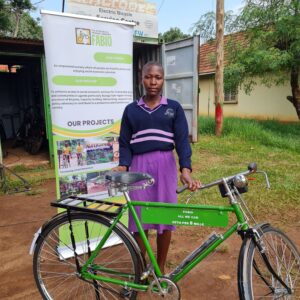
 FABIO was founded in 1994 as a community bicycle workshop and formally registered as an NGO in 1997 under the Uganda NGO Registration Act (Registration No. S.5914/97). Over nearly three decades, FABIO has transformed the image and application of bicycles in Uganda—a country where this vital tool was historically undervalued—and positioned itself as a pioneer in non-motorised transport across the African continent.
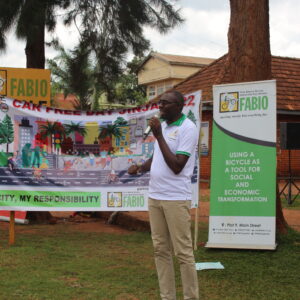
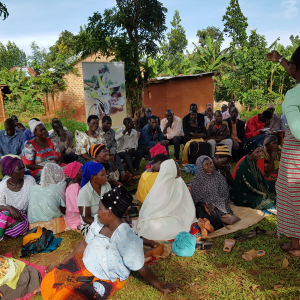
FABIO pioneered the first Pan-African Bicycle Conference (PABIC), elevating the bicycle’s role in development discourse, and played a key role in advocating for and formulating Uganda’s Non-Motorised Transport (NMT) Policy, officially signed by the Minister of Works and Transport in 2014. Recognising the urgent need for improved public transport, FABIO partnered with ITDP Europe and EURIST to initiate a campaign for sustainable transport solutions, which catalysed the Bus Rapid Transit (BRT) debate for Kampala, while initiating community pressure groups that demonstrate commitment to grassroots mobilisation and civic engagement.
The strong reputation FABIO has built has attracted significant partnerships and regional recognition. A working contract with GIZ funded the Eastern Region Civil Society Conference hosted by FABIO in Mbale, graced by Rt. Hon. Rebecca Kadaga as guest of honour. FABIO was appointed Vice Chairperson of the Jinja NGO Forum and now plays a key role in the Eastern Region Planning Committee, further strengthening its influence in regional development initiatives. Today, FABIO is recognised as a leading advocate for non-motorised transport and grassroots empowerment in Uganda, combining innovation, community engagement, and strategic partnerships to deliver sustainable, long-term impact. Explore our partners to learn how we collaborate with governments, NGOs, and private sector innovators to drive lasting change across the region.
Our Team
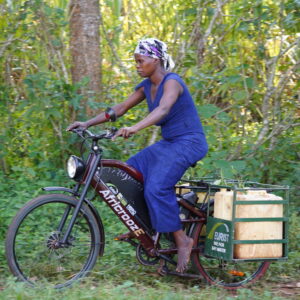
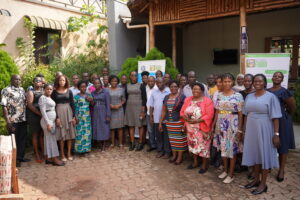 We operate as a learning organisation where continuous growth is embedded in our culture. Half our team have enrolled in professional courses, while all staff develop skills through cross-departmental collaboration. We invest in capacity building through training in data protection, e-bike maintenance, organisational development, and storytelling—strengthening our ability to serve communities effectively.
FABIO is guided by five core values: Passion and Teamwork, Equity and Equality, Accountability, Integrity, and Quality. These reflect our commitment to collaborative effort, fair access for all—especially marginalized groups—and programs that meet the highest standards of impact. Discover our team to meet the people driving this transformation.