Livelihood
Self-help groups
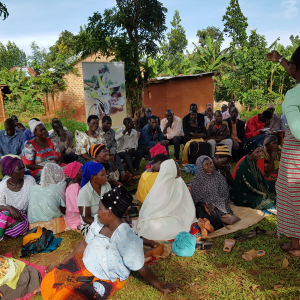
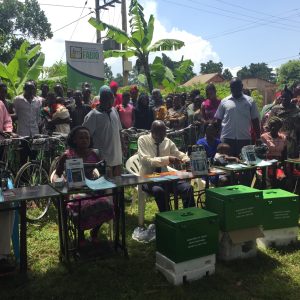
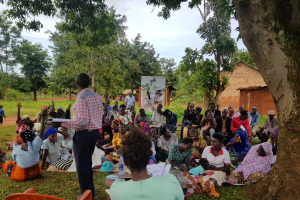 The Self‑help groups came as the result of the rapid response project during the COVID-19 lockdown‑era hardship. The project mobilises, forms and trains vulnerable community saving groups. FABIO provides them with bicycles and start-up kits to support families to have reliable market access, a safe way to transport goods, water and health‑care trips, and build a collective fund for micro‑businesses. Complementary training in soft‑skills and energy‑saving stove construction further reduces household expenses and builds resilience. Since its 2020 launch, savings have risen by approximately 10% and 16 groups now operate across six districts, with expanding demand from neighboring villages.
Cycle to School
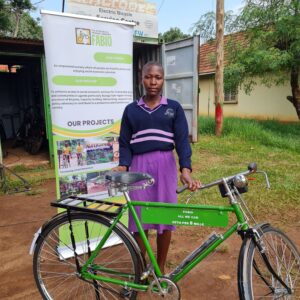
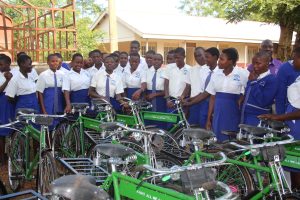 The Cycle to School project targets learners that walk long distances from 5-12 km to school addressing low attendance, tardiness, dropout, and teenage pregnancies—with 70% being received by adolescent girls, recognising their heightened vulnerability and transformative impact of keeping them in school. Because the bike is multipurpose, families also benefit from reduced travel time for errands, income‑generating activities and household chores, which lifts per‑capita income and overall living standards.
Beyond mobility, the project integrates a safeguarding program for all learners. Safe Clubs are formed to promote mindset change, protection, and awareness on avoiding teenage pregnancy. Parents are mobilised to appreciate the value of education for all children, reinforcing community support around each learner.
Teenage Parent Skilling
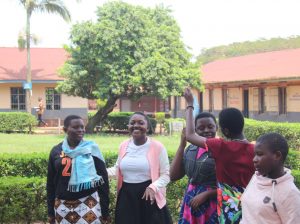 The Teenage Parent Skilling Program emerged from FABIO’s monitoring after the COVID‑19 pandemic, which revealed a sharp rise in school dropouts and teenage pregnancies. Many of these young people were treated as outcasts by their families and communities, facing rejection and isolation simply because they had become parents. FABIO responded with a rapid intervention that has since grown into a structured program of empowerment and reconciliation.
In Mabira Village, Butagaya sub‑county, thirty‑six teenage parents (34 girls and 2 boys) were enrolled in a four‑month tailoring course followed by six months of practical work. Alongside tailoring, participants received training in financial literacy, group savings, and basic bicycle maintenance—with the bicycle at the center as a tool for accessing markets, health facilities, and income‑generating opportunities. Parents were also mobilised to harmonise with their children, with some even supporting daughters to return to school after childbirth, while others embraced vocational training provided by FABIO.
The program has helped these youth form savings groups, build collective resilience, and begin to restore dignity and opportunity in their lives. Already, several teenage mothers have acquired sewing machines to run their own businesses, while teenage fathers have pooled savings to start brick‑making enterprises.
Read the success stories to see how these new skills are transforming lives and future livelihoods.
African E-bikes
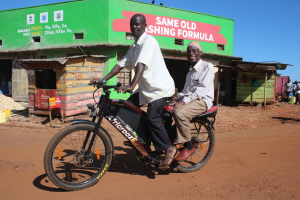 The African E-bike project began as a pilot in 2017, testing three bicycles fitted with electric motors and batteries. These prototypes were used in critical areas—water transport, ambulance services, and boda boda passenger rides—showing how e‑mobility could uplift the face of the bicycle while meeting the needs of communities in hilly terrain and those carrying heavy loads.
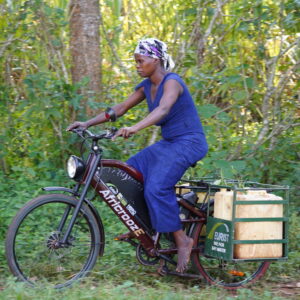
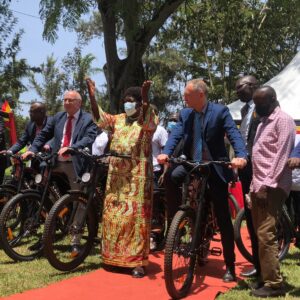
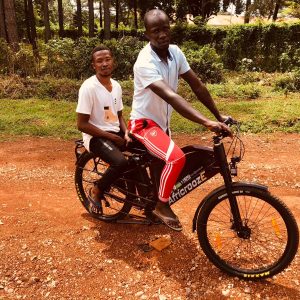
From this pilot, and through partnership with EURIST and funding from GIZ, FABIO developed a bicycle tailored to African conditions: the AfricroozE. This innovation brings clean, fast, and low‑effort mobility to Uganda’s Busoga sub‑region. With a 30 km/h speed, 40 km range (fully loaded), and 120 kg load capacity, the AfricroozE delivers reliable transport without exhaust emissions. Solar‑powered charging stations in Jinja and Iganga keep the bikes running on renewable energy.
Since the public launch in 2022, over 300 AfricroozEs have been distributed to a diverse set of users—bicycle boda‑bodas, delivery riders, ambulance services, water carriers and cargo‑bike operators. Beneficiaries receive hands-on training in safe riding and basic maintenance, and the bikes are owned outright, ensuring long‑term utility. Recent distributions to Self‑help groups (72 e‑bikes) have improved access to health centres, markets and gardens, reduced transport costs and enabled reliable water and commodity transport over distances of 8‑20 km.
Bicycle Ambulance
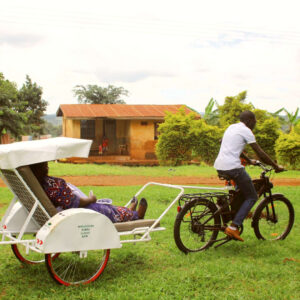
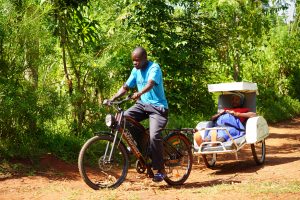 The Bicycle Ambulance program works with Health Centres and Village Health Teams (VHTs). They are equipped with e‑bikes fitted with trailers and stretchers designed to carry patients, including unconscious ones, to the nearest health facilities.
The e‑bikes provide rapid emergency response, especially for expectant mothers, and are also used for routine outreach and transporting patients who have no other options. When not carrying trailers, the bicycles support VHTs in immunisation campaigns and in sharing vital health information about changes at health facilities.
Since deployment, the impact has been remarkable: childhood vaccination and deworming gaps have fallen from 60% to 40%; childbirths by untrained attendants have dropped from 6 in 10 to 1 in 10, with more mothers reaching health facilities safely. They can be operated by anyone, ensuring flexibility and community ownership without reliance on a single operator with zero operational transport costs, making the program both sustainable and scalable.
Person with disabilities friendly bicycles
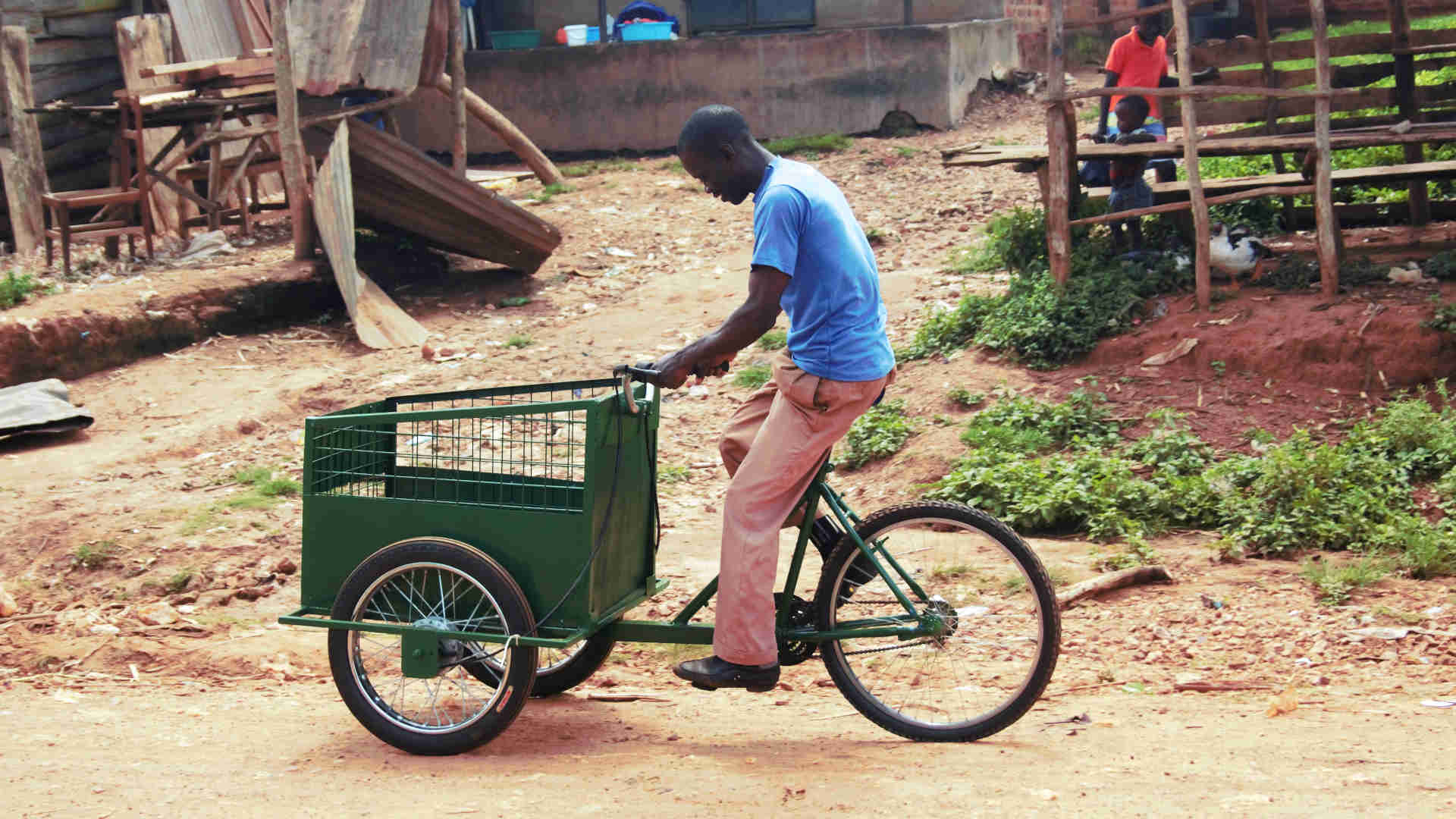
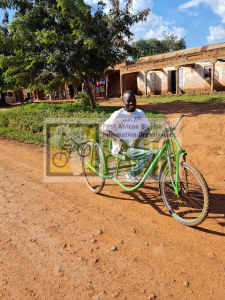 FABIO prioritises inclusiveness and the accommodation of all people. In 2019, after recognising the mobility barriers faced by Persons with Disabilities (PWDs), FABIO piloted its first hand‑powered bicycle—a three‑wheeler designed for those unable to pedal with their legs but still needing access to schools, health centres, and markets. These bicycles gave both women and men the chance to move independently, challenging the perception that PWDs were a burden in their communities.
Building on this success and guided by gender training, the Inclusion of Special Interest Groups initiative was launched to address gaps identified in the 2022 gender‑and‑inclusion mapping, which showed that PWDs were not benefiting from existing projects. In 2023, FABIO designed and produced 12 PWD‑friendly bicycles: five for men, five for women engaged in business, and two for students (one boy and one girl).
These adapted bicycles have transformed lives—enabling beneficiaries to reach schools, health centres, and markets, while turning mobility barriers into income‑generating opportunities. Seventy percent of recipients report higher household earnings and improved social standing. As one beneficiary, Ndanda Sadat, described: “This bike is a dream come true.”
Read the success stories to see how these bicycles are transforming lives and future livelihoods.